

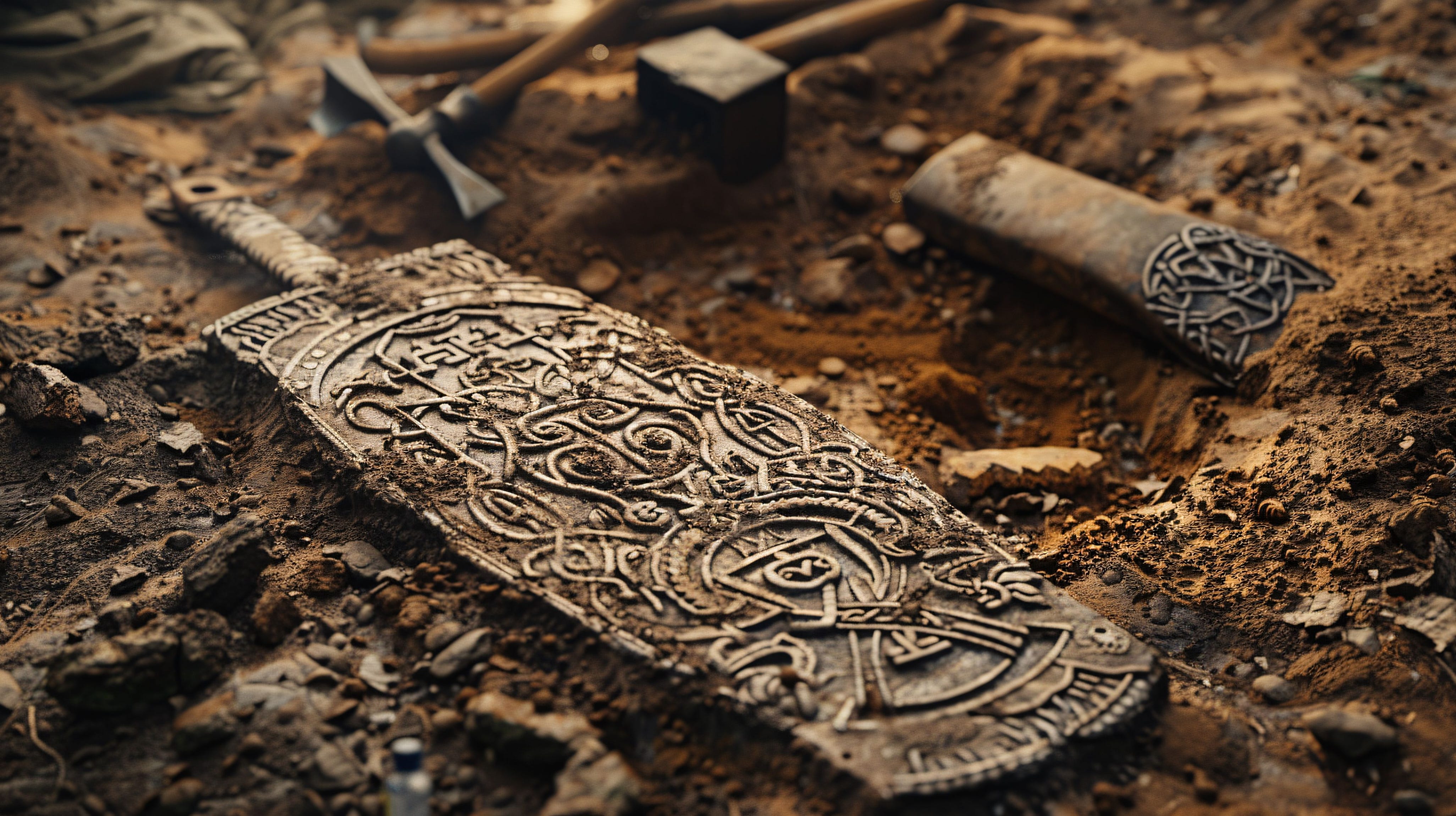
For nine days and nine nights, Odin hung from Yggdrasil, pierced by his own spear, offering himself to himself. No food, no water, no comfort—only suffering and observation, staring down into the depths until finally, at the moment of greatest agony, the runes revealed themselves. He grasped them with a terrible cry, fell from the tree, and possessed knowledge that transformed him from a powerful god into the All-Father who understood the deep magic underlying existence.
This mythic pattern of voluntary suffering leading to breakthrough revelation provides one of storytelling’s most powerful templates. In an age of instant information, Odin’s nine-day ordeal reminds us that meaningful knowledge cannot be googled—it must be earned through ordeal that transforms the seeker as thoroughly as the knowledge itself.

The Voluntary Nature of Sacrifice
Odin chose his suffering. No enemy captured him, no fate compelled him, no external force drove him to the tree. He recognized that certain knowledge exists beyond ordinary reach and willingly paid the price to obtain it. This voluntary element distinguishes earned revelation from convenient discovery—the character must recognize the need for deeper understanding and accept the cost of obtaining it.
Novels built on this pattern create protagonists who actively pursue revelation rather than stumbling upon it. The detective who sacrifices sleep, health, and relationships to understand a case. The scientist who risks reputation and sanity to prove a theory. The parent who confronts buried trauma to save a child. These characters don’t wait for information to arrive—they hang themselves on their own metaphorical trees, willing to endure whatever ordeal delivers the truth they need.
The Mounting Pressure
The myth specifies nine days—not a moment of sudden insight but sustained ordeal where pressure accumulates until breakthrough becomes possible. Odin didn’t see the runes on day one or even day five. He endured increasing hunger, thirst, pain, and desperation until his ordinary consciousness broke down sufficiently for deeper perception to emerge.
This extended suffering creates the rhythm successful novels need for major revelations. Information discovered too easily feels arbitrary, while knowledge that arrives only after mounting pressure feels earned. The protagonist must try conventional approaches first, exhaust normal resources, sacrifice comfort and security, and finally reach the crisis point where only breakthrough or breakdown remain possible.
The Crisis Before Clarity
At the ninth day’s end, Odin’s suffering reached its peak—the moment when death or enlightenment became the only alternatives. This crisis point, where the seeker must either transcend their limits or be destroyed by them, marks the fulcrum where revelation becomes possible. The knowledge doesn’t arrive despite the suffering but because of it, emerging from the crisis itself.
For novelists, this pattern illuminates how to structure breakthrough moments. Major revelations should arrive not when characters feel comfortable but when they’ve been pushed beyond their limits. The traumatized witness who finally speaks only when silence becomes more unbearable than memory. The corrupt official who confesses when guilt outweighs self-preservation. The scientist who sees the pattern only when conventional thinking has been exhausted.
Knowledge That Transforms
Odin grasped the runes “with a terrible cry”—the revelation itself was traumatic, not triumphant. The knowledge he gained transformed him fundamentally, granting power but also burden. He could never again be the god who didn’t know these secrets. The price of wisdom wasn’t just the nine-day ordeal but permanent transformation into someone who carries that weight forever.
This transformative element distinguishes meaningful revelation from mere information transfer. When your protagonist discovers crucial knowledge, it should change them irrevocably. The detective who understands the killer’s psychology but loses their innocence. The historian who uncovers truth but can never see their nation the same way. The child who learns their parent’s secret and loses their childhood forever.
The Pattern Applied
Contemporary novels that follow Odin’s pattern share key structural elements: protagonists who voluntarily pursue difficult knowledge, extended periods of mounting pressure before revelation, crisis points where breakthrough or breakdown become the only options, and transformative discoveries that permanently alter the seeker.
Literary fiction uses this pattern when characters must confront buried family secrets or personal trauma—the knowledge exists but can only be accessed through sustained willingness to face pain. Mystery novels employ it when investigators must sacrifice everything to understand criminals whose psychology mirrors their own darkest possibilities. Historical fiction applies it when characters pursue truths that will destroy comfortable myths about their culture or ancestors.
Beyond Information
Odin’s ordeal teaches us that revelation and information are fundamentally different. Information can be transmitted; revelation must be earned. Information adds to what we know; revelation transforms who we are. The nine-day hanging provides a structural template for distinguishing between plot points that merely advance action and breakthroughs that genuinely change everything.
When your novel’s major revelations feel unearned or arbitrary, return to Odin’s wisdom: meaningful knowledge requires voluntary sacrifice, sustained pressure, crisis that breaks normal consciousness, and transformation that makes returning to ignorance impossible. Hang your characters on their own trees, pierce them with their own spears, and let them stare into the depths until the runes they need finally reveal themselves—not as gifts but as hard-won prizes that change them forever.
REVELATION STRUCTURE FRAMEWORK
Phase 1: Recognition of Need
Character realizes ordinary knowledge is insufficient
Voluntary decision to pursue deeper understanding
Acceptance of potential cost
Phase 2: Sustained Ordeal (Days 1-6)
Mounting pressure without breakthrough
Exhaustion of conventional approaches
Sacrifice of comfort, safety, or certainty
Progressive stripping away of defenses
Phase 3: Crisis Point (Days 7-9)
Maximum pressure where breakthrough or breakdown are only options
Character pushed beyond normal limits
Ordinary consciousness breaks down
Phase 4: Breakthrough Revelation
Knowledge emerges from crisis itself
“Terrible cry” moment of painful insight
Information that transforms rather than merely informs
Phase 5: Transformed State
Character permanently changed by knowledge
Cannot return to previous ignorance
New burden of understanding
Key Principles:
Revelation must be earned through voluntary sacrifice
Pressure must mount over extended time
Breakthrough arrives at crisis point, not before
Knowledge transforms the seeker permanently
The cost of knowing shapes the value of what’s known
🏆🏆🏆🏆🏆 fantastic as always. You will have to compile all of these into a book, it’s too good not to.😎
I truly love this. Thank you so much.